Category: Education

  • Pakistan Declares Education Emergency: A National Wake-Up Call

    Pakistan Declares Education Emergency: A National Wake-Up Call

    Islamabad – May 2, 2025:
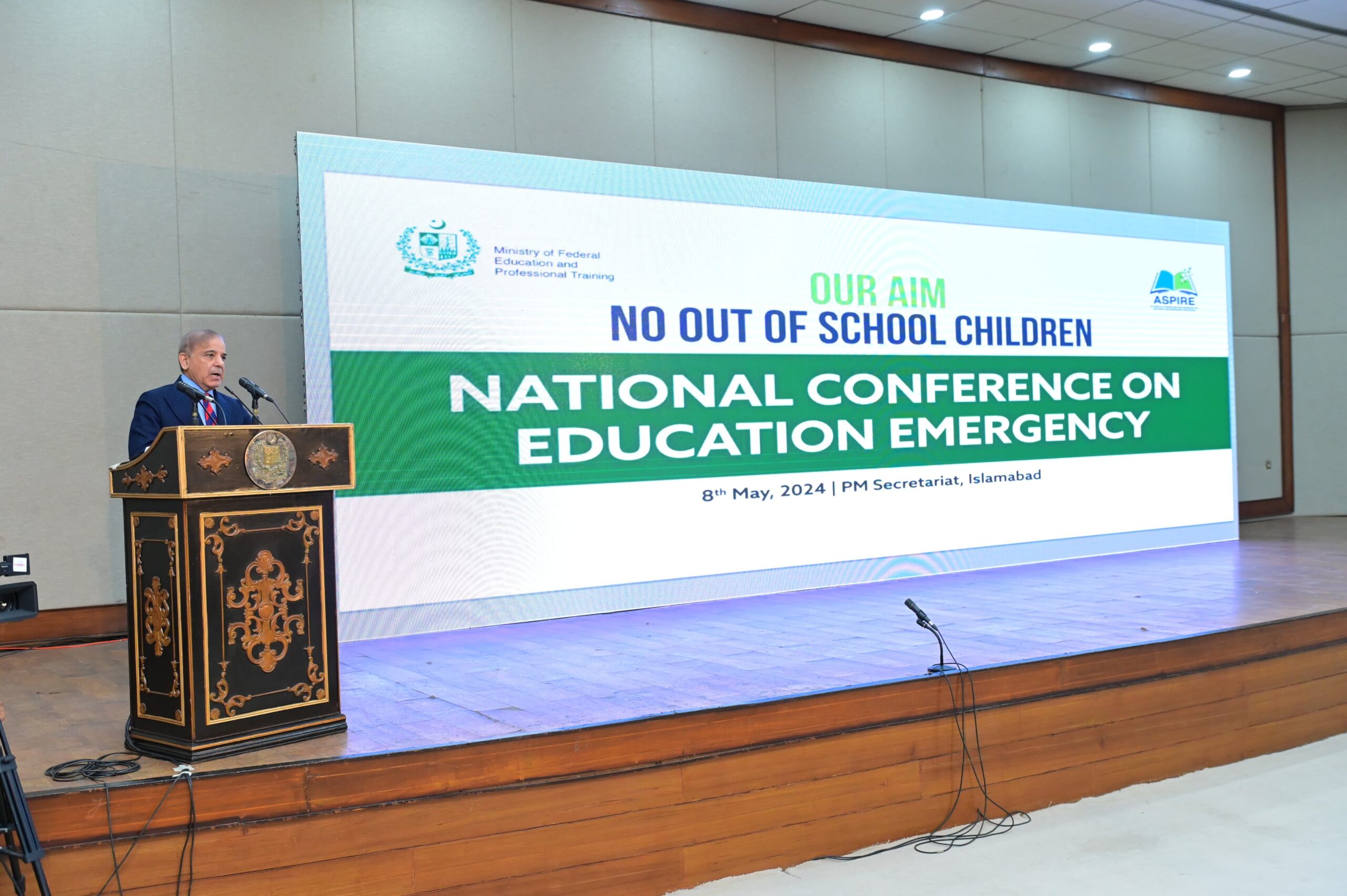
    In a bold and urgent move, the Government of Pakistan has officially declared an “Education Emergency” across the country to address the alarming number of out-of-school children, which has now exceeded 26 million. Prime Minister Shehbaz Sharif, in a recent press briefing, emphasized that no nation can progress without universal education.

    “Education is not just a right; it’s a national duty,” he said. “Every child we fail to educate is a future we choose to ignore.”

    🏫 Nationwide Reforms and Budget Boost

    To back this commitment, the federal education budget has been tripled, now crossing Rs 25 billion. A significant portion will be allocated to new school construction, recruiting trained teachers, and digitizing classrooms—especially in rural and underserved areas.

    • Rs 5 billion has been allocated for new Daanish Schools in Gilgit-Baltistan and AJK.
    • Rs 5 billion will fund youth skill development under the PM’s initiative.

    💻 Digital Pakistan: Tech-Based Learning for All

    In partnership with global tech companies, provinces like Punjab and Sindh are rolling out digital reforms in schools. The Punjab government has collaborated with Google to issue Digital Student IDs linked with learning platforms. Moreover, over 500,000 Chromebooks are set to be distributed nationwide under a $200 million tech agreement.

    These laptops are not just for elite institutions—they’ll be handed out in public schools, madaris, and vocational centers to reduce the digital divide.

    👩‍🏫 Focus on Girls’ Education

    With dropout rates among girls still high in remote areas, the government is working with NGOs and international partners to launch campaigns that provide incentives for families to send girls to school. Free transport, uniforms, and monthly stipends are part of the new initiative named “Taleem Rozan”.

    Education Minister Khalid Maqbool Siddiqui remarked:

    “When we educate a girl, we educate a generation. It’s time Pakistan treated every school-going girl like a national asset.”

    🧑‍💻 Vocational and IT Education Drive

    Meanwhile, Sindh Governor Kamran Tessori has announced an ambitious program to train 500,000 youth in information technology and freelancing skills this year. New tech centers will open in Karachi, Hyderabad, and Sukkur, offering courses from basic coding to AI applications.
  • Punjab’s Digital Education Revolution: 200,000 Students to Benefit from Google-Led Reforms

    Punjab’s Digital Education Revolution: 200,000 Students to Benefit from Google-Led Reforms

    In a landmark initiative to modernize education, the Punjab government has partnered with Google for Education and its local collaborator, Tech Valley, to introduce AI-driven digital learning tools across the province. This collaboration aims to equip 200,000 primary and secondary students with Digital IDs powered by Gemini, granting them access to advanced educational resources.

    Announced during the British Educational Training and Technology Show (BETT UK 2025), the agreement encompasses the Punjab School Education Department and the Punjab Education Foundation. It focuses on integrating cutting-edge technology into classrooms to enhance learning outcomes.

    Education Minister Rana Sikander Hayat emphasized the transformative potential of this partnership:

    “By equipping students and educators with world-class digital tools and data-driven insights, we aim to empower future generations in Punjab and beyond.”

    Key components of the initiative include:

    • Digital Safar Program: An internet safety and skills development program introducing students to coding and safe online practices.
    • Teacher Training: Certification for 50,000 teachers to effectively utilize digital tools and integrate AI into their teaching methodologies.
    • Chromebook Distribution: Provision of Chromebooks to 200 schools, facilitating access to digital learning platforms.

    This comprehensive approach aims to bridge the digital divide, ensuring that students across Punjab have the tools and knowledge to thrive in a technology-driven world.

    For more information, visit the Punjab School Education Department or Tech Valley.

  • Pakistan Allocates 333 Additional Medical and Dental Seats for Students from Balochistan and Former FATA

    Pakistan Allocates 333 Additional Medical and Dental Seats for Students from Balochistan and Former FATA

    In a significant move to promote equitable education, the Government of Pakistan has announced the allocation of 333 additional medical and dental seats for students from Balochistan and the former Federally Administered Tribal Areas (FATA) for the academic session 2024–25.

    The announcement was made by Federal Health Minister Syed Mustafa Kamal during a press conference at the Pakistan Medical and Dental Council (PMDC) headquarters in Islamabad. He emphasized the government’s commitment to providing inclusive educational opportunities for students from underprivileged and remote regions.

    “This policy is not just about numbers; it is about bridging deep-rooted regional disparities and cultivating a healthcare system that reflects the true strength and diversity of the nation,” stated Minister Kamal.

    The additional seats have been allocated over and above existing quotas, based on recommendations from the Senate Standing Committee on National Health Services. These seats will be available for Higher Education Commission (HEC) scholars from Balochistan and FATA.

    To ensure transparency and fairness, the PMDC will oversee the implementation process, while provincial governments have been urged to expedite the allocation procedures. Public medical and dental colleges in Balochistan and FATA have been instructed to apply for seat enhancements through the PMDC, in accordance with established criteria.

    This initiative is part of the government’s broader efforts to address educational disparities and foster national integration by empowering students from marginalized communities.